
PHASE ONE · ANAGEN
Years of growth
A scalp hair grows for two to seven years, which is why some people can grow hair much longer than others.
How much in a year?
Every hair on your head runs its own slow cycle.
Scalp hair grows about a centimetre a month, rests for a few months, then falls out to make way for a new one. Knowing the cycle explains why some shedding is normal, why stress shows up months later, and why gentle handling matters. Here it is in plain English.
Plain English, with the sources linked.
Updated
Check how fast it growsTHE SHORT ANSWER
At any moment, 85 to 90% of scalp follicles
are in the growth phase.
PHASE ONE · ANAGEN
A scalp hair grows for two to seven years, which is why some people can grow hair much longer than others.
How much in a year?PHASES TWO AND THREE
Growth stops for about two weeks, then the hair rests for around three months before it is shed.
How much shedding is normal?EVERY DAY
Dermatologists list everyday habits that damage hair, from rubbing it dry to styles that pull.
Four gentle habitsGeneral information only, not medical advice. For advice about your own health, speak to a doctor, pharmacist or other qualified health professional.
A QUICK GROWTH CHECK
Pick a span of time to see roughly how much length healthy scalp hair adds. The figures use about 1 cm a month (Cleveland Clinic) and about 6 inches a year (StatPearls).
These are typical averages. Real growth varies from person to person and from hair to hair, and trims and breakage take some length back.
TWO NUMBERS WORTH KNOWING
Shedding is part of the cycle,
and stress can show up months later.
50 to 100
Hairs shed on a normal day
The American Academy of Dermatology says shedding this many hairs a day is normal. Losing many more for a while is called telogen effluvium, and the AAD notes hair tends to regain its fullness within six to nine months once the body readjusts.
EVERY DAY · AAD
Nerves > colour
A Harvard-led study in mice
Stress made nerves in the hair follicle release noradrenaline, which used up the stem cells that restore hair colour. Regrowing hair came through grey, and the loss of those stem cells was permanent.
STRESS AND GREY · 2020
Both effects run on the hair cycle's slow clock. Hair that falls out today stopped growing months ago, which is why shedding often follows an illness or a stressful event by a few months.
GENTLE CARE
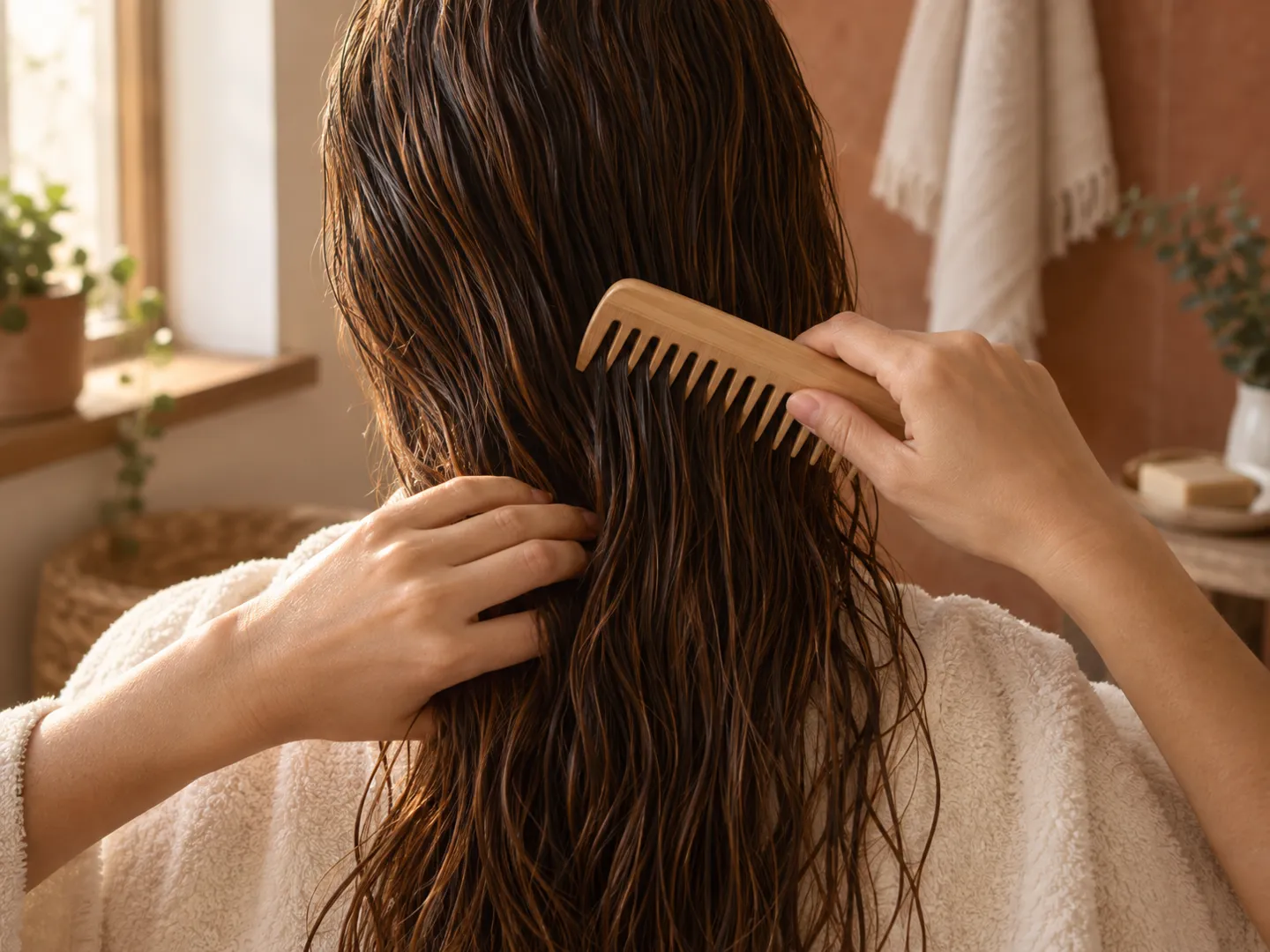
Massage shampoo gently into the scalp and let the rinse carry it through the lengths. The AAD suggests conditioner after every shampoo.
Wrap wet hair in a towel to soak up the water instead of rubbing it dry, then let it air dry where you can.
When you use a dryer or styling tools, choose the lowest heat setting and keep contact with the hair short.
Wear tight ponytails, buns and braids loosely and not every day. If a style feels painful, the AAD says it is too tight.
HAIR FACTS
You are born with more than a million hair follicles on your head, and most healthy adults have 80,000 to 120,000 full-grown hairs on the scalp.
That is the growth rate a medical reference text gives for healthy hair, roughly half an inch a month or six inches a year.
Between 85% and 90% of scalp follicles are in the growth phase at any one time. The resting phase lasts about three months.
After a stressful event, most people notice extra shedding a few months later, not straight away. After giving birth, it usually peaks about four months on.
The AAD says hair never needs 100 brush strokes a day. Brushing and combing only to style puts less strain on it.
QUICK QUESTIONS
Short answers to the questions people ask most.
About 1 cm a month, according to Cleveland Clinic. A medical reference text puts healthy growth at 0.35 mm a day, which works out at roughly 6 inches (about 15 cm) a year.
The American Academy of Dermatology says it is normal to shed between 50 and 100 hairs a day. Shedding well beyond that for a while is called telogen effluvium.
A shock to the body can push many growing hairs into the resting phase at once. The AAD notes that most people see the extra shedding a few months after the event, and that hair tends to regain its normal fullness within six to nine months once the body readjusts.
In mice, yes. A Harvard-led study published in Nature in 2020 found that stress activates nerves that use up the stem cells which restore hair colour. Once those stem cells are gone, the pigment does not come back.
They can. Repeated pulling from tight ponytails, buns, braids or extensions can cause traction alopecia, which the AAD says can become permanent the longer it goes untreated. If a style feels painful, it is too tight.
Sources
A NAME WITH BOUNCE
doodlehair.com is part of the DoodleSale portfolio. It isn't in an auction right now, but you can ask about leasing it.